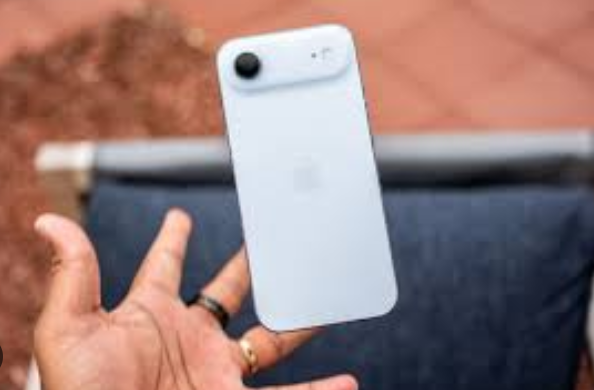
In September 2025, Apple introduced a new chapter in its smartphone history with the unveiling of the iPhone Air — a device that pushes the envelope of design and engineering. Positioned between the base iPhone 17 and the high-end Pro models, the iPhone Air stands out not for how powerful it is, but for how thin and light it feels in the hand. Apple has marketed it as the thinnest iPhone ever made, combining premium materials, streamlined hardware, and innovative internal architecture to deliver flagship performance in a design unlike anything seen before in the iPhone lineup.
This article provides a comprehensive overview of every aspect of the iPhone Air — including pre-order details, design and build, core specifications, performance, camera systems, accessories, pricing and availability, user reception, and expectations for the future. Whether you’re considering pre-ordering one yourself or just want to understand what makes this device unique, this article covers it all.
Apple iPhone Air Pre-Order Info
Announcement and Launch Timeline
Apple officially announced the iPhone Air on September 9, 2025 during its annual Apple event, which also included products like the Apple Watch Series 11 and AirPods Pro 3. Pre-orders for the new iPhone Air began shortly after the announcement, typically following Apple’s usual cadence — pre-orders opened on Friday, September 12, 2025, with general availability in stores and online starting September 19, 2025.
This pattern aligns with Apple’s tried-and-true rollout strategy: unveil the new product on Tuesday during the keynote, start pre-orders that Friday morning, and ship or make the device available in retail outlets the following week.
How to Pre-Order the iPhone Air
To pre-order the iPhone Air, customers worldwide had several options:
-
Apple Online Store — Pre-orders could be placed directly through Apple’s website or the Apple Store app.
-
Carrier Partners — Major carriers in supported regions (e.g., AT&T, Verizon, T-Mobile in the U.S., EE or Vodafone in the U.K.) offered pre-order options, often bundled with trade-in deals or special financing.
-
Retailers and Authorized Resellers — Electronics retailers in key markets also took pre-orders — though availability varied by region.
Many early adopters reported that pre-order stock was widely available on launch day for the iPhone Air, unlike some of the more in-demand Pro models. This suggested Apple intentionally manufactured a larger initial batch to ensure that its new design didn’t immediately run into backorders.
Design and Build: A Breakthrough in Thinness
Unmatched Slim Profile
Perhaps the most defining characteristic of the iPhone Air is its incredibly thin body. According to Apple’s official materials, the iPhone Air measures just 5.6 mm thick, making it the thinnest iPhone ever produced.
For context, most flagship smartphones hover around 7–8 mm thick — and Pro models are often even thicker due to advanced camera hardware. Achieving this ultra-thin form factor without sacrificing performance required substantial engineering innovations — from the material choices to internal component layout.
Titanium Frame and Durability
To create a device that felt both elegant and robust despite its slender build, Apple used a grade 5 titanium frame. This premium material is stronger and more durable than the aluminum traditionally used in mainstream iPhones. The polished titanium offers a mirrored finish that looks premium and helps reinforce the structural integrity of the device.
Ceramic Shield and Screen Protection
The front of the iPhone Air features Ceramic Shield 2, a glass-ceramic composite that Apple says offers significantly improved scratch resistance and reduced glare. For the first time, Ceramic Shield also covers the back of the device, giving edge-to-edge protection.
By combining the new front and back materials with the titanium frame, Apple achieved a device that feels luxurious yet rugged — minimizing the risk of cracking or bending despite its thin profile.
Plateau Design for Cameras and Components
To gain internal space for essential hardware (including the battery and advanced silicon chips), Apple introduced a unique sculpted plateau on the back of the iPhone Air. This precision-milled area houses the rear camera, speaker, and internal chips while keeping the rest of the body ultra-thin.
The design demonstrates a balance between thinness and practicality — the plateau provides necessary depth without compromising the sleek feel that defines the device.
Display and Visual Experience
6.5-Inch Super Retina XDR Display
Despite its slender form, the iPhone Air sports a large 6.5-inch Super Retina XDR display, offering vivid colors, deep blacks, and excellent brightness levels.
This screen size is intentional: Apple wanted the Air to offer a comfortable viewing experience for media, gaming, and productivity — but in a body that feels lighter and thinner than its counterparts.
ProMotion Technology
For the first time on a non-Pro iPhone, the Air includes Apple’s ProMotion technology, delivering an adaptive refresh rate of up to 120 Hz. This means smoother scrolling, more responsive touch interactions, and generally snappier visuals across the interface.
ProMotion continually adjusts the refresh rate down to as low as 1 Hz to conserve battery when high refresh isn’t needed — such as during static viewing.
Brightness and Outdoor Visibility
The display is capable of very high peak brightness (up to 3000 nits in bright outdoor lighting), which Apple claims is the highest ever on an iPhone. This makes it easier to see the screen in direct sunlight.
Overall, while visually similar to other models in the iPhone 17 generation, the Air’s display stands out because it pairs flagship quality visuals with a form factor that still feels incredibly light.
Internal Performance: Apple Silicon at Work
A19 Pro Chip: Power Meets Efficiency
At the heart of the iPhone Air is the A19 Pro chip, Apple’s flagship silicon. It includes:
-
A 6-core CPU for everyday tasks and multitasking.
-
A 5-core GPU designed for high-end mobile gaming and graphics performance.
-
Neural engines and accelerators for machine learning tasks and AI workflows such as image processing and AR.
This chip balances power and efficiency, delivering performance similar to the iPhone 17 Pro series — but in a thinner, more compact package.
Wireless and Connectivity Chips
In addition to the main CPU, the iPhone Air integrates Apple’s N1 wireless chip and the C1X cellular modem:
-
N1 enables next-generation wireless standards like Wi-Fi 7, Bluetooth 6, and Thread — improving connectivity reliability and speed.
-
C1X modem delivers up to twice the speed of the previous generation C1, while using significantly less energy — helping the Air maintain solid battery life despite its small size.
By combining these chips, Apple ensured that thinness didn’t come at the cost of network or wireless performance — a frequent concern with slim phones.
Battery: All-Day Life and Smart Power Management
Battery Capacity and Optimization
Due to the slender internal space, the iPhone Air uses a compact but optimized battery. While it’s smaller than those in the Pro models, Apple’s combination of efficient silicon and smart software optimization allows the Air to deliver impressive all-day battery life.
Apple also introduced an Adaptive Power Mode within iOS 26, which learns your daily usage patterns and prioritizes power for the tasks that matter most — extending battery life further.
Charging Capabilities
The iPhone Air supports USB-C charging and fast charge capabilities:
-
Up to ~50% charge in around 30 minutes with a 20W or higher adapter.
-
MagSafe wireless charging support (though at a slightly reduced rate compared to Pro models).
In addition, Apple released a proprietary MagSafe Battery accessory that magnetically attaches to the back of the Air and dramatically boosts battery life — reportedly up to 40 hours of video playback when used in tandem.
Camera and Imaging Capabilities
48 MP Fusion Rear Camera
Although the iPhone Air sacrifices multi-camera systems in favor of slimness, it still delivers a powerful 48 MP Fusion main camera. This camera excels at capturing detailed images with strong color fidelity thanks to:
-
Larger sensor size for better low-light performance.
-
Sensor-shift optical image stabilization.
Apple’s sophisticated Photonic Engine and updated image pipelines enable improved processing for portraits and everyday shots — even without an ultra-wide or telephoto lens.
18 MP Center Stage Front Camera
On the front, the iPhone Air introduces an 18 MP center stage camera sensor that captures high-quality selfies and offers advances in video calls and portrait modes.
This front camera also features a unique square-sensor design, which enables broader field-of-view capture without needing to tilt the phone, enhancing flexibility for both photo and video framing.
Video Recording and Features
Despite being thinner and lighter, the iPhone Air supports:
-
4K Dolby Vision recording at up to 60 fps
-
Action mode for smooth handheld video
-
Cinematic stabilization and spatial audio recording
Apple’s video processing remains a standout — even in a phone that trades some camera complexity for ultra-thin design.
Software and Ecosystem Integration
iOS 26: Intuitive, Powerful, Adaptive
The iPhone Air runs iOS 26, which introduces a refreshed interface, enhanced lock and home screen customization, and deeper integration of AI-driven features.
Smart battery management, adaptive refresh rate handling, and fine-tuned system animations combine to deliver a fluid and efficient experience that takes advantage of the hardware’s strengths without introducing unnecessary power drain.
Integration with Apple’s broader ecosystem is seamless: users can easily switch between Mac, iPad, and Apple Watch, share files via AirDrop, use Universal Control, and more.
MagSafe and Accessories
Apple also introduced a series of iPhone Air-specific accessories:
-
Ultra-thin MagSafe cases and bumpers designed to protect without adding bulk.
-
Crossbody strap options for convenience and portability.
-
The Air MagSafe Battery for extended usage during travel or heavy use.
These accessories highlight Apple’s focus on enhancing the Air experience while maintaining its slim profile.
Pricing and Availability
Pricing Tiers and Storage Options
Pricing for the iPhone Air reflects its positioning as a premium but not ultra-luxury device:
-
256 GB: Approximately $999 (USD) or equivalent in other markets.
-
512 GB: Higher tier for users who need more storage.
-
1 TB: Top tier for power users and those capturing lots of media.
Available color options include space black, cloud white, light gold, and sky blue — offering both classic and vibrant choices for buyers.
Regional Delays and Availability Issues
While the iPhone Air launched globally, there were localized exceptions. For example, Apple postponed the release in China due to regulatory issues with the device’s eSIM-only design — a consequence of the device’s ultra-thin frame eliminating the physical SIM tray.
Reception and Early User Feedback
Consumer and Analyst Reactions
Initial reactions to the iPhone Air have been mixed:
-
Positive feedback centers on the device’s feel, lightweight design, premium materials, and display quality. Some users appreciate having Pro-like performance and 120 Hz refresh without jumping to the more expensive models.
-
Criticism tends to focus on compromises made to achieve the slim form factor — notably the lack of multiple rear cameras and concerns about battery capacity during heavy use. A smaller battery and simplified camera setup may deter users who rely heavily on photography or extended battery life.
Some analysts also noted that while the iPhone Air might appeal to design enthusiasts and everyday users, it could have limited mass appeal among power users who prioritize camera versatility and battery endurance.
Still, initial pre-order availability suggests demand has been solid; unlike some Pro models, launch day stocks remained plentiful in many regions.
The Future of the iPhone Air Line
Apple appears committed to expanding the Air lineup. Reports suggest that discontinuing the model after just one year would be unusual — the company and many users see the Air as a potential long-term product family positioned between the base and Pro tiers.
Looking ahead, future iterations of the iPhone Air could introduce enhancements such as a more advanced camera array, further battery improvements, or additional software capabilities tailored to the Air form factor.
Conclusion
The Apple iPhone Air represents a bold step in Apple’s smartphone strategy — prioritizing thinness, refined design, and flagship performance without the bulk associated with premium models. It stands out as the slimmest iPhone ever made, with a lightweight titanium body, advanced display, Pro-level performance, and a compelling value proposition for many users.
Pre-order availability was strong, reflecting both consumer interest and Apple’s confidence in this new model’s appeal. While some compromises (such as camera complexity and battery size) distinguish the Air from its siblings, many users have embraced its unique blend of form and function.
For potential buyers and tech enthusiasts alike, the iPhone Air offers a fresh perspective on what a modern smartphone can be — proof that innovation in design still has room to evolve, even in a category as mature as the iPhone. Whether you’re upgrading from an older iPhone or simply drawn to its striking aesthetics and performance, the iPhone Air is a noteworthy addition to Apple’s lineup and a sign of things to come.